Best variety and class
of Jaggery is
only cultivated and
found in India. Jaggery
is
known for mesmerizing
tastes; especially when
it is Indian Jaggery!
Indian Jaggery served by
us is known for their
highest quality and
freshness that no other
can assure. Well checked
by international
experts; our Indian
Jaggery has been highly
demanded in the global
marketplace. We also
offer you load of
varieties for Jaggery so
that you get plentiful
options to choose. Our
palm Jaggery is also
very popular in the agro
food industry. Also, at
our place you get
Jaggeries packaged and
handled in safest ways.
For giving in wondrous
Jaggery to world, we are
rated as one of the
topnotch Jaggery
exporters and suppliers
in India.
it
is very rich in iron,
which, a composite of
hemoglobin prevents
anemia. Taj Agro
Products, Jaggery is
especially recommended
for pregnant women. It
is rich in magnesium,
iron, & potassium.
Magnesium strengthens
the nervous system &
potassium is vital to
conserve the acid
balance in the cells.
Taj Agro Products,
Jaggery is chemical
free! It does not
contain sulphur dioxide,
lime, phosphoric acid,
bleaching agents or any
viscosity reducers that
are used in making
'extra white jaggery' by
most manufacturers.
Origins and
production
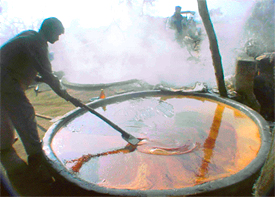
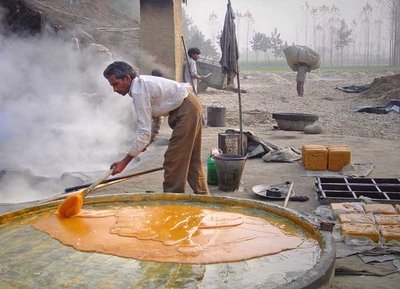
Jaggery is made of the
products of both
sugarcane and the palm
tree. The sugar made
from the sap of the date
palm is both more prized
and less commonly
available outside of the
regions where it is
made. The sago palm and
coconut palm are also
now tapped for producing
jaggery in South India,
Pakistan, and Sri Lanka.
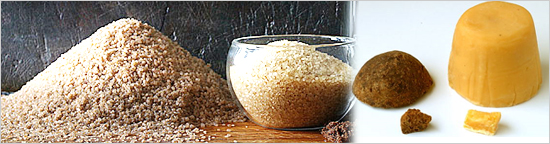
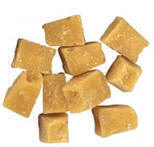
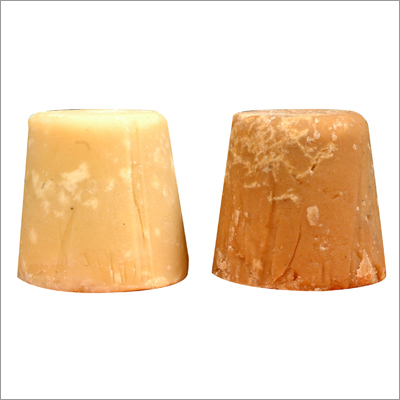
All types of the sugar
come in blocks or pastes
of solidified
concentrated sugar syrup
heated to 200°C.
Traditionally, the syrup
is made by boiling raw
sugarcane juice or palm
sap in a large shallow
round-bottom vessel.
Uses
Jaggery is used as an
ingredient in both sweet
and savory dishes across
Pakistan, India and Sri
Lanka. For example, a
pinch of jaggery is
sometimes added to
sambar, rasam, and other
staples in India.
Jaggery is also added to
lentil soups (dal) to
add sweetness to balance
the spicy, salty, and
sour components,
particularly in Gujarati
cuisine called, add in
cooking.
The Indian state of
Maharashtra is the
largest producer and
consumer of jaggery. In
Maharashtra, most
vegetables curries and
dals contain jaggery.
Jaggery is specially
used during Makar
Sankranti for making
sweetmeat called tilgul.
Similarly, in Gujarat on
Makara Sankranti, this
preperation is made, and
known as Tal na Ladu or
Tal Sankli'. In rural
Maharashtra, water and a
piece of jaggery is
given when someone
arrives home from
working under a hot sun.
Kakvi, a byproduct from
production of jaggery,
is also used in rural
Maharashtra as a
sweetener. It contains
many minerals not found
in ordinary sugar and is
considered beneficial to
health by the
traditional Ayurvedic
medical system.
In addition, in the
Indian state of
Rajasthan, jaggery has a
religious significance.
Many of the festivals
are incomplete without
jaggery as it is offered
to the deity during
worship. Also, it is
regularly consumed as a
sweetener and is a part
of many sweet delicacies
such as gur ka chawal
(lit. "jaggery rice"), a
traditional Rajasthani
dish.
In Gujarat famous laddus
are made from wheat
flour and jaggery, and
also another recipe
Puranpoli, which has its
roots in Maharasthra, is
also made using jaggery
as sweetener. Also,
jaggery is consider
handy sweet, which is
shared on any good
occassion. On Engagement
ceremonies jaggery is
made into small
particles and mixed with
coriander seeds and
distributed, hence in
many Gujarati
communities Engagement
is commonly known as
Gol-Dhana literally
meaning Jaggery &
Coriander seeds.
In Myanmar, jaggery is
harvested from toddy
palm syrup. In central
Myanmar and around Bagan
(Pagan), toddy syrup is
collected solely for the
purpose of making
jaggery. The translucent
white syrup is boiled
until it becomes golden
brown, and then made
into bite-sized pieces.
It is considered a sweet
and is eaten by children
and adults alike,
usually in the afternoon
along with a pot of
green tea. It has been
referred to locally as
Burmese chocolate. Toddy
palm jaggery is also
sometimes mixed with
coconut shreddings,
jujube puree or sesame,
depending on the area.
This type of jaggery is
also used in Burmese
cooking, usually to add
color and enrich the
food.
In Pakistani and Bengali
cuisine, it is very
common in making sweet
dishes. Special sweet
dishes are made by
mixing jaggery with milk
and coconut. Popular
sweet dishes like la??u/na?u
or pa?ishapta pi?ha are
made by mixing jaggery
with coconut shreddings.
Jaggery is also molded
into novelty shapes as a
type of candy.
Other uses include
jaggery toffees and
jaggery cake made with
pumpkin preserve, cashew
nuts, pea nuts and
spices.Jaggery may also
be used in the creation
of alcoholic beverages.
Jaggery is also
considered auspicious in
many parts of India, and
is eaten raw before
commencement of good
work or any important
new venture, or after
good news are shared by
family and
friends.[citation
needed] The
Muzaffarnagar District
in Uttar Pradesh has the
largest jaggery market
in the world, followed
by Anakapalli of the
Visakhapatnam District
in Andhra Pradesh.
Kolhapur a district
place in western
Maharashtra is also
famous for its variety
which is yellow in color
and is most sought after
in Maharashtra and
Gujarat
alike.Preparation of
jaggery
Besides its uses as a
food, jaggery may also
be used to season the
inside of tandoor ovens.
Health benefits
Jaggery is considered by
some to be a
particularly wholesome
sugar, retaining more
mineral salts than
refined sugar. Moreover,
the process does not
involve chemical agents.
Indian Ayurvedic
medicine considers
jaggery to be beneficial
in treating throat and
lung infections; Sahu
and Saxena[3] found that
in rats jaggery can
prevent lung damage from
particulate matter such
as coal and silica dust.
Gandhi felt that jaggery
was healthier than
refined sugar, as it was
not introduced into the
blood as rapidly.
As such, he used it in
his own personal diet
and recommended it for
use in his invented
goat-milk diet (and all
other diets and eating
styles).





 known for mesmerizing
tastes; especially when
it is Indian Jaggery!
Indian Jaggery served by
us is known for their
highest quality and
freshness that no other
can assure. Well checked
by international
experts; our Indian
Jaggery has been highly
demanded in the global
marketplace. We also
offer you load of
varieties for Jaggery so
that you get plentiful
options to choose. Our
palm Jaggery is also
very popular in the agro
food industry. Also, at
our place you get
Jaggeries packaged and
handled in safest ways.
For giving in wondrous
Jaggery to world, we are
rated as one of the
topnotch Jaggery
exporters and suppliers
in India.
known for mesmerizing
tastes; especially when
it is Indian Jaggery!
Indian Jaggery served by
us is known for their
highest quality and
freshness that no other
can assure. Well checked
by international
experts; our Indian
Jaggery has been highly
demanded in the global
marketplace. We also
offer you load of
varieties for Jaggery so
that you get plentiful
options to choose. Our
palm Jaggery is also
very popular in the agro
food industry. Also, at
our place you get
Jaggeries packaged and
handled in safest ways.
For giving in wondrous
Jaggery to world, we are
rated as one of the
topnotch Jaggery
exporters and suppliers
in India. 

 ©
2008, www.tajagroproducts.com All rights reserved.
©
2008, www.tajagroproducts.com All rights reserved.